
Last Updated on 5 months ago by Joel Samuel McQueen
(New and Improved 2025)
Part1
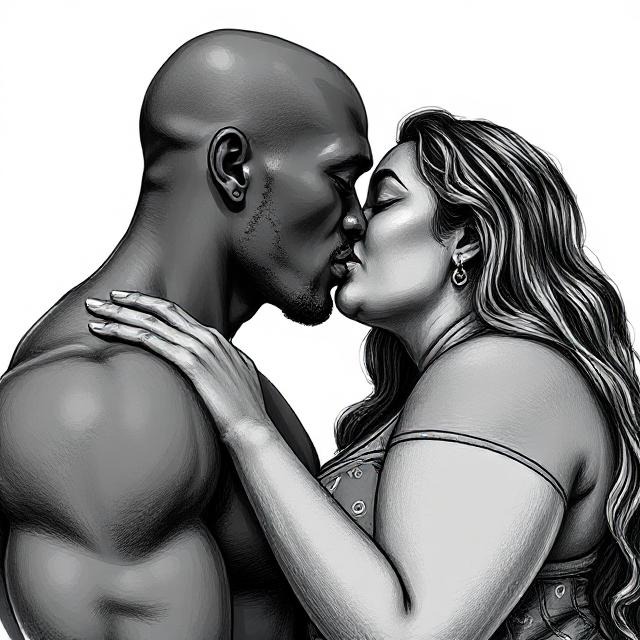
Once upon a time a man with a broken spirit named Iron and his East Indian wife moved up the hill. Petal was her name but she was no flower. Moreover, she was oddly shaped with very large breast, a big round stomach and a flat backside. The women in the village, who had secretly admired Iron’s glistening black body from behind their living room curtains, also wondered what Iron saw in her in the first place. But despite her present condition, Petal had once possessed in her youth a blossoming freshness, a green fertility and a succulent ripeness which was nature’s gift to all females that sadly peeked at age nineteen.
Her soft, long, jet black hair that dropped halfway down her back, her rose beige complexion that resembled a white woman’s –all of this Iron saw and desired. As for Petal, the sin of marrying a negro man was sufficiently pardoned each night she slept with Iron. Together the couple made five dougla children, all of whom Petal did her best to raise under the law of Indian superiority, even as she lived among blacks. Iron too was a prisoner under her tyranny.
Before his marriage to Petal, Iron was no joke. Built like an ox, with broad shoulders and a thick neck that supported a rather small bean shaped bald head, he resembled a Nubian wrestler from Sudan. In terms of raw strength and stamina, he could lift twice as much as the average man and work from sun up to sun down. This almost superman capacity was inherited from his male ancestors — cane cutters on a large planation in an even smaller Caribbean island.
When Iron was just a boy he witnessed the untimely death of his father, whose right hand was accidentally crushed between the heavy rollers used to crush sugarcane. Because the entire purpose of men on the island was tied to their work, Iron’s father shriveled and withered hand in turn caused his very soul to also shrivel and wither until his premature death. Widowed, Iron’s mother was forced to lend her son out for day work on the very plantation where his father perished. And so Iron, before he had learned to read or write sufficiently well, became the bread winner of the house. Not even a year had pass when Iron’s mother found herself a new lover, who came at the back door late at night and left before the cock crowed. Sometimes, laying in the dark on his meager bedding in his tiny room, Iron could hear the stranger’s voice talking with his mother.
“You have something for me?” asked the stranger.
“You have something for me,” demanded Iron’s mother.
“That and more,” cried the stranger.
“ I doh shame. I taking it all …and money too,” cried Iron mother with merriment.
Although the two had never met, the stranger’s presence was felt throughout the house in the lingering smell of stale coffee, cigarettes and rum. Iron had also noticed the strong grip the stranger possessed over his mother, who would dress seductively as she prepared succulent pots of stew chicken, beef or pork for her nightly guess, which Iron was forbidden to touch.
One evening young Iron returned from the fields and had entered the small kitchen where he called to his mother. Realizing he was home alone, a sudden burst of joy rose up in him as he thought of all the things he could get into, for he was still a child.
“I must first eat,” he said to himself.
On the kitchen table he noticed a poor bowl of food-rice and cabbage, which he quickly devoured but was still hungry. Then like some wild animal that had entered through an open kitchen window, he began scavenging the cupboards, overturning innocent pots and pans that raised a clamor in protest.
Suddenly, a small voice in his head told him to open the oven. Inside, a still warm iron pot of stew beef sat. He thought twice about uncovering it for he knew it meant trouble. But here again the voice that had previously told him where to find the hidden pot in the first place now told him to have a taste. Like a lion at a feast, he gorged himself before falling asleep on the living room floor. Overwhelmed by a boyhood dream, he never felt the presence of his mother now standing over him.
“Don’t make joke in here. I cant believe this dotish boy take he fast self and eat meh food in the pot I cover down and put away for Clive,” said Iron’s mother, in a thunderous uproar.
“Alton(his given name) wake up and stand up,” she cried with venom spewing from her mouth.
Having temporarily forgotten the previous incident with the pot of stew, poor Iron now stood facing his mother with a mix of confusion and slight irritation, which she mistook for insolence and which made things ten times worst.
“You don listen when I talk ” cried Iron’s mother.
Yes mammy,” said Iron,
“Boy, why you head so hard” she cried. “How much time I must warn yuh to ask meh before you touch meh pot.”
Suddenly, Iron stood erect, realizing that the pot of stew he had eaten was the cause of his mother cussing.
“I was hungry,” said Iron.
“And it have that big mess ah rice I make since Sunday and leave on the table for you ” she said. “Why you don’t’ eat that instead of touching meh man food.”
Iron shrugged his shoulders in silence before bowing his head in shame.
He longed to tell his mother how sick and tired he was of eating the same mess everyday and was on the verge of speaking up form himself when he felt his brain rattling in his skull as if he had ran into a wall. It was his mother who had did it. In anger, she had flung a heavy frying pan across the room with all her might striking him on the side of his skull. Living up to his reputation, Iron remained standing as he looked at his attacker, who displayed neither motherly remorse nor pity.
Then and there Iron knew he would leave her. Sadly, the damage was done. The force of the blow had extinguished–like a series of exploding light bulbs– the sections of the brain that governed self-expression and self-worth.
Part 2
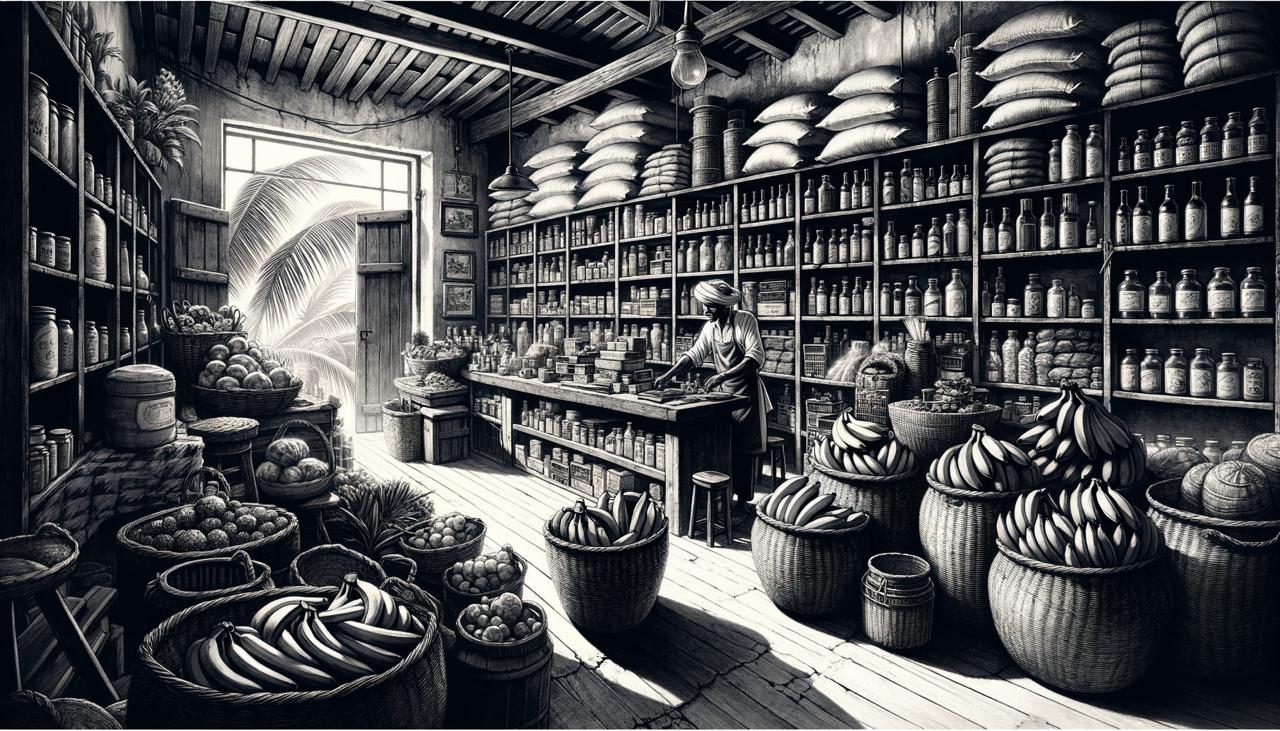
Located at a cross roads, Mr. Sahu’s shop made a killing selling to his mostly negro customers. All sorts of provisions–salt fish, mackerel, tin milk, hops bread, brown sugar, snacks for children, pots, pans, brooms and even school items–lined the crowded shelves and narrow aisles of the wooden structure. It was Iron’s responsibility to keep the shelves stocked, a job he executed with all his might. Three years had passed since he left home and Iron–now eighteen—had established himself as a thriving young bachelor thanks to Mr. Shau’s generosity, which was not so much so considering that part of Iron’s wages went right back into Mr. Shau’s pocket. For the small shack located just behind the general store that Iron rented was owned by Mr. Sahu.
Early every morning, nevertheless, young Iron stood under the light of a crooked lamppost as he waited for Mr. Sahu to appear. In the distance, he could hear the sound of jangling keys followed by the figure of a short Indian man in a matching dull gray Kurta pajama set.
“Morning Master Sahu , “ said Iron earnestly.
“It’s only good meh boy if I make a pot of money for the day,” said Mr. Sahu, throwing the bunch of keys into Iron’s waiting hand.
Iron made quick work of turning the four heavy padlocks that secured the store. Once inside, he switched on the lights and stood proudly over his domain. A feeling of comfortable warmth embraced him. He was at home here, and Mr. Sahu was the closet thing to a father figure, since the death of his own. As for Mr. Sahu, he came to trust young Iron far more than he wanted. on His two sons had left for England to earn professional degrees—one as doctor and the other a lawyer. And so despite the fact Mr. Sahu had a general dislike for negro race, Iron became his son so to speak.
Mr. Sahu’s eyes were sharp as owl from his seated position behind and old clunky register. Every customer that entered and existed he made a note. This morning as things were slow, he got to talking with Iron. Such conversations, which Mr. Sahu dictated, often centered around the ways and habits of negro men, women and children.
“So help meh God” he cried, “I don’t understand how all you people those fuss and fight over the price of groceries so dare but still most of all you must go to party every Saturday night.”
“Black man and them in no good, I aint fraid to tell you,“ said Iron in dutiful agreement.
“Boy doh say that about your race. Besides, we Indians have we good and we bad too, just like all you,” retorted Mr. Sahu.
“I just speaking the truth sir,” said Iron.
“Still boy, yuh people at least good for one thing,” said Mr. Sahu with a telling smile.
Iron was quick to read the meaning behind Mr. Sahu last statement, as he bowed his head in quite shame.
“Boy, listen meh good, God give every man he gift. He give white man him gift, Him give Indian man him gift. And he give black man the biggest one of them all,” said Mr. Sahu with mischievous chuckle.
“I don’t fraid to ask you Mr. Sahu. What is the white man gift?”
“War, my boy. Industry and war. When the English come to India was during my grandparents time. They take we land, starve we people and turn Hindu against Muslim, Muslim against Hindu. All for what.? A claptrap railroad.”
As was the case with Mr. Sahu , Iron knew how to play his cards well by asking question after question of the old Indian, if by the end it meant he had less work to do. But just as Mr. Sahu was preparing the outline of his speech on the Indian man’s natural gift, the first customer of the day, a negro mother and daughter, entered the shop. Then another and another. -It always happened this way- customers came flooding in so that Mr. Sahu was forced to take up the matter another day.
Part 3
On Saturday’s and Sunday’s, Mrs. Sahu took over the management of the store, accompanied by their daughter Petal. Afearful hawk herself, Mrs. Sahu, kept an even sharper eye on the store than her husband. For some time now in between sales, she had observed young Petal taking stock and inventory in one particular aisle, which just so happened to be the very one that Iron was in. Like a hen in search of a cock, she walked back and forth through the narrow aisles, brushing her long perky breast against the otherwise preoccupied Iron.
And of course, Petal knew better. Since childhood, Mr. and Mrs. Sahu had adequately warned her about negro boys. The punishment being both disinheritance and banishment from the family. But still Petal could care a less. Neither her eyes nor her heart could disguise the truth: that this black man as he stood before her was the height and breadth of manliness and the seed of her budding sexual desires.
And so Petal’s mating dance went on uninterrupted by Mrs. Sahu, who had a much bigger nut to crack. Namely the unfortunate marriage engagement whereby Petal’s fiancé had fled back to India, taking with him Mr. and Mrs. Sahu’s substantial dowry. Like a ripe mango blown by the wind falls from a great height to the ground , so did the answer to the problem of what to do with her unmarried daughter hit her with abrupt thud. That night she would share her plans with her husband.
After tea, Mr. and Mrs. Sahu slightly embraced like brother and sister before retiring to their separate beds in the master suite they shared. In the dark Mrs. Sahu called to her husband.
“Kurma,” cried Mrs. Sahu softly.
“Yes wife,” answered Mr. Sahu in a tone of voice both fatigued and annoyed.
“ I was watching Petal today and the negro fella you have woking for you in the store,” said Mrs.
Sahu.
“What went on today?” asked Mr. Sahu.
“Well, a blind bat could see how this girl child we bring into this world does misbehave,” said Mrs. Sahu.
“What do she now?” asked Mr. Sahu.
“The worthless girl throwing she self on the negro boy like she don’t have training,” said Mrs. Sahu.
“And you watch it and don’t give she a good back hand?” asked Mr. Sahu.
“That was meh first thought. But then when I sit back and add up everything that went on with Petal and the marriage. And sitting there and I start to see things for what it is,” said Mrs. Sahu.
“How so?” asked Mr. Sahu.
“Well Lord, that money we lost on the dowry we not getting back and we don’t have money for a second dowry,” said Mrs. Sahu.
“So,” said Mr. Sahu.
“So. I figure we could entice Iron to marry she. And so doing we lift this burden from us back,” said Mrs. Sahu.
“Huh. You think the negro boy will go for it?” asked Mr. Sahu.
“Don’t make joke. Them negro boys taking Indian woman more than roti skin ,” said Mrs. Sahu.
“Not true,” said Mr. Sahu.
“Then watch and see Kurma, watch and see,” cried Mrs. Sahu.
Part 4
It would take a special skill and craftiness to sell a man an item he doesn’t need and cannot afford, which was the case of Iron being sold on the idea of marriage to Petal. But Mr. Sahu was just the man for the job. That very Monday morning, as Iron stood waiting under the lamppost, Mr. Sahu appeared with his jangling keys, but this time he was not alone. Beside him walked Petal.
“Morning Sir,” said Iron with a slight look of confusion.
“Morning meh boy,” said Mr. Sahu, throwing the key at Iron, who for the first time almost dropped the bunch.
Observing Iron’s anxiety, Mr. Sahu sort to reassure the boy that there was no threat of him loosing his job.
‘Iron meh boy, meh wife want Petal to learn the business is how you see she here this morning with we.”
“But I is the one…” said Iron in protest before he was cut off.
“Don’t fret yourself meh boy,” said Mr. Sahu chuckling. “Just do as I say and show Petal how things does get done.”
That entire morning Petal stuck to Iron like a bird on laglee, as Mr. Sahu watched the young couple from his usual seat behind the cash register. When lunch time finally came, Mr. Sahu unexpectedly left on some urgent business that he said would take several hours and in which time Iron was in full charge of the store until his return. The store, moreover, would be locked said Mr. Sahu before exiting.
Like a child left to his or her own devices, Petal was giddy with excitement at the opportunity to have Iron all to herself. In no time she was in Iron ‘s lap where she began singing the following song in a seductive voice:
Give meh the Iron!
I want it bad
Give meh the steel
I taking it hard, hard, hard.
At first, Iron resisted and even played dead to her sexual advances. But every man had his limits as did Iron, who cornered Petal like a helpless prey before devouring her. Right there on the spot.
In less than week, Petal was vomiting in her parents backyard with morning sickness, and that very night took off for Iron’s house. She told him of her pregnancy, and with a bag full of money stolen over the years from the store’s register, the couple headed north.
One month later, Mr. Sahu had left for work as usual only to discover that his once faithful worker was gone. As for Mrs. Sahu she was not in the least surprised but in fact smiled when she found the hand written letter Petal had left on her pink bed spread.
Part 5
The house that Iron built for Petal on the hill was advantageously positioned at a crossroad from which Petal could maco the comings and goings of every negro man, woman and child that inhabited the upper part of the village. Like her father before her, Petal obsession with the affairs of her blacks was an outgrowth of his philosophy that the best way to beat your enemy was to know him better than they knew themselves. But while the aim of Mr. Shau’s study of the negro was to get ahead financially, Petal motives, on the other hand, was purely social in that its purpose was to keep the negro in his right place. To accomplish this feat of social engineering if you will, Petal collected and disseminated gossip, old talk and tay lay lay throughout the village like the spreading of an infectious disease among an ignorant population.
On this particular morning Petal was seated on her perch in the gallery when saw her neighbor to the west, Mr. B. on his way to work and called to him with some news she had being meaning to tell him.
“Morning neighbor,’ called Petal.
“Morning, morning neighbor, said Mr. B, in a hurry.
“Oye, neighbor, wait a minute nah,” said Petal, as she walked to the foot of the crossroads.
“Listen nah, you have family that does come by yuh house in the day?” asked Petal with feign bewilderment.
“Family. No. How so?” asked Mr. B, with growing concern.
“Well hear nah neighbor, I thought you know the person is why I never say nothing before. I take it was you brother coming in the house when you gone,” said Petal.
“Is what the ass is this I hearing,” cried Mr. B.
“Take time, neighbor, said Petal. I don’t say what you thinking wrong. But just ask your wife questions before you go off.”
‘Take time! Take time! Ask questions. I go do for she,” said Mr. B, storming off to work.
Not long after, Mr. B had hatched come home unexpectedly ready to cut his wife and her lover to pieces but found instead that the lover Petal had warned him about was only Mrs. B flesh and blood brother. He had been coming to his sister’s house seeking comfort and solace after a painful separation from his wife. As the cutlass in Mr. B right hand slowly came down to his side, he explained to his wife and brother-in-law how things reached so far. It was Petal.
Part 6
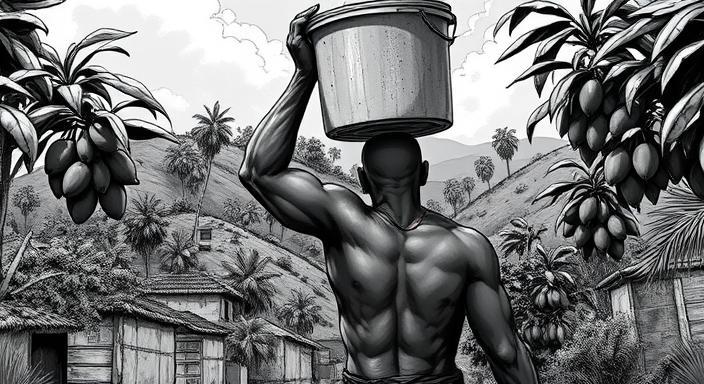
In their family, Petal wore the pants. On Saturday mornings during the dry season, it was Iron alone who went down the hill to the government standpipe for water. In preparation, Iron stripped down to a pair of old trousers that were hastily cut at the knee and which displayed his thick calves that resembled green papayas. As for his upper body–which was equally developed with pecks that looked like small melons—he wore a sleeves t-shirt.
On the hill, toting water became a competition among the men in the village both young and old, for that Iron was crowned king. He was not only capable of balancing a ten gallon bucket of water on his head but even more was the fact that he did it without so much as a spoonful of water slushing over the top of the bucket unto the dry ground. Such a feat attracted both the awe and pity of the village women, including Iron’s last daughter, Abgail.
Among Petal’s five children, it was Abgail’s job to count each trip her father made before the water was emptied into the black storage tank by the kitchen. Sitting on big stone in the back yard, she counted each trip by stacking bottle caps on top of each other.
“ How much trips we make meh gyal ?” asked Iron
“Eight daddy and two to go,” replied Abgail.
In truth, Abgail always inflated the number of trips her father made for she loved him.
Part7
For the twenty years of her reign, Petal had installed her own version the of the Hindu caste system in her home. In her tone, her speech and her actions Petal showed preference for those of her children that appeared closer to Indian. Abgail—despite been Petal’s most beautiful daughter with doll like features that included high cheekbones and stunning jaw line and long coarse dogula hair—was more or less an untouchable. Like her father, she was too dark. When her had come of age matured and became interested in the opposite sex, Petal became even more vocal about her preferences which she eventually wrote down like some commandments for her children to sing. Here it is:
The white man is best,
but if not an Indian will do
But never the negro in marriage to you
Lay with a few men
if your heart’s desire
As the flame of lust is a temporary fire
Let your babies be white
Or complexion light
Their hair straight
Makes their future bright
As Asians we aspire
to be first place
So together let us strive
to lighten the race.
The end
When Iron’s mother had died, he returned to his childhood home, where standing in the kitchen, he recalled the incident of the frying pan that altered the course of his life. Among his mother’s possession, he took a Bible that contained underlined scriptures, numerous receipts, bank statements along with a worn picture of his father that made him smile.
Not long after Mr. Sahu had also died. Petal and Iron packed the children in a car and drove south to console Mrs. Shau, who for the first time met her grandchildren, . In her room, which Mrs. Sahu had turned into a time capsule, Petal found among her things a picture of the Indian man she was to marry and was suddenly very glad indeed. The wake for Mr. Sahu was a big affair, attended by dozens of Indian family members but surprisingly even more black customers of the shopkeeper at the crossroads.
Back on the hill, Petal returned to her seat at the crossroads watching the neighbors come and go. But this when Iron called, she answered him Lord.